
A galaxy-sized MMORPG of danger and infamy. In space!
There are flight sims, there are space sims, and then there is Elite: Dangerous, an ambitious MMORPG Kickstarted from across the pond in the UK.
A galaxy-sized MMORPG of danger and infamy. In space!
There are flight sims, there are space sims, and then there is Elite: Dangerous, an ambitious MMORPG Kickstarted from across the pond in the UK.
Man, we should probably all start playing some video games on this video game podcast...
Welcome to the last regular episode of Nerds Without Pants of 2014! Since it is our last opportunity to talk about what media we’ve been consuming until January, we get together and…not really talk much about video games. Huh. Well, it’s a show, anyway.
I had a clever line, but I am full of turkey and black friday deals.
Welcome back to Nerds Without Pants! Casey joins us for the first time to talk a lot about Dragon Age Inquisition. Come for the video game discussion. Stay for the talk about furries and sexual puns.
Rolling Deep
A plucky thief with a heart of gold arrives outside a small village. Using her companion, a scraggly mutt, she distracts the guards at the gate and sneaks into the nearby sewer entrance. Upon her arrival, she picks a few pockets to gather what she needs, and prepares to leave when a drunken man in plate mail being harassed by the henchmen of the town butcher, a local crime boss of sorts, stumbles onto the scene. A few backstabs later, and our thief now has a new partner, but her canine companion has been kidnapped by the butcher’s men, and they’re off to liberate him.
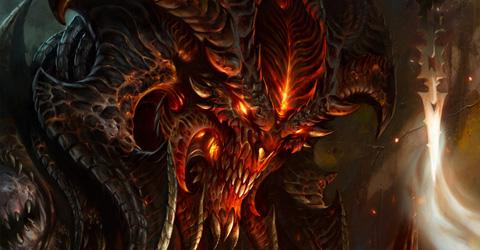
Or: How Diablo 3 helped me fight some of my personal demons.
Recently, I came out of “review retirement” to give a glowing report of the PlayStation 4 version of Diablo 3. In that review I talked about how the game really pulled me in this second time around and wouldn’t let go. It’s a fantastic console port and I have no qualms about double dipping on it. If anything, I got more enjoyment out of Diablo 3 on PS4 than I did on the PC, but a lot of that had to do with it being the right game at the right time. While the review platform wasn’t the appropriate place for it, I need to explain just why the act of obliterating hordes of demonic foes for a hundred hours was so cathartic for me. In light of the recent gaming culture landscape I think it’s important to remember how great video games can be, and in rare circumstances even healing.
Loot lust: the 8th deadly sin.
When Diablo 3 came out for the PC in 2011, I don’t think I really understood what it was. Don’t get me wrong: I loved it. It was the first game I awarded five stars to at PixlBit and it went on to become my game of the year. With all of that said, I treated it like every other one of my games: I played it, enjoyed it, and moved on to the next thing. It wasn’t until I plunged back in with the PlayStation 4 “Ultimate Evil” edition that I finally let Diablo get its claws into me, and now I’m trapped.
Rise of the machines.
The original Mega Man was the perfect NES action game: powerups, platforming, shooting, and controller-tossing difficulty merged with ‘80s story conventions: the convergence of man and machine, greed, and technology gone rogue. I can only imagine what people were thinking when they picked it up in 1987 and saw a silly middle-aged fellow stuck in an uncomfortable pose with his pistol on the box cover; I’ll bet they wouldn’t be thinking that in a few decades there would be people dressed up as Mega Man along the streets of Hollywood, making a quick buck posing with tourists. It all started with a great game that is still great today.
You can listen for free, but if you want to throw 99 cents our way we'll take it...
Well hello, there! Unfortunately it’s a two man band again this time, as Patrick was out for work reasons. Angelo and Julian hold down the fort by talking for FAR TOO LONG about mobile games, free to play philosophy, and Christmas shopping.
He is the snake to my mongoose. Or the mongoose to my snake. Either way, it’s bad. I don’t know animals.
I could write a perfectly standard review of Middle Earth: Shadow of Mordor. I could go point by point and explain how this is a third person action game with heavy emphasis on stealth and melee combat in the vein of Batman: Arkham Asylum/City. I could talk about the great graphics and the satisfying fighting mechanics, and how some of the stiff animation and problems with context-sensitive button prompts are the reason why it doesn’t get five stars. I could do all of that and you would have a good idea of what Shadow of Mordor is, but you wouldn’t understand what makes it new and special. So I have a different idea.
BioWare has a nifty way of continuing your adventure, but does it work?
The Dragon Age series has something of an identity crisis, due in large part to its disjointed development history. Even though Dragon Age: Origins came out a couple of years after the first Mass Effect, it was actually announced way back in 2004 as a PC exclusive. The roots of Origins could be found in BioWare’s classic Baldur’s Gate series, and the design sensibilities of the game were far removed from the company’s more recent action/RPGs like Jade Empire and Mass Effect. Dragon Age 2 was clearly very influenced by the success of Mass Effect 2, and the input of now BioWare parent company EA was easy to see. While Dragon Age 2 alienated some fans of Origins it also created a new set of people invested in the world of Thedas. Now we have a third entry in the series that has the difficult task of keeping old players invested while trying once again to do a “soft reboot” of the franchise. How does BioWare hope to craft a new adventure but still make players feel like they made their mark on the world? Enter the Dragon Age Keep.